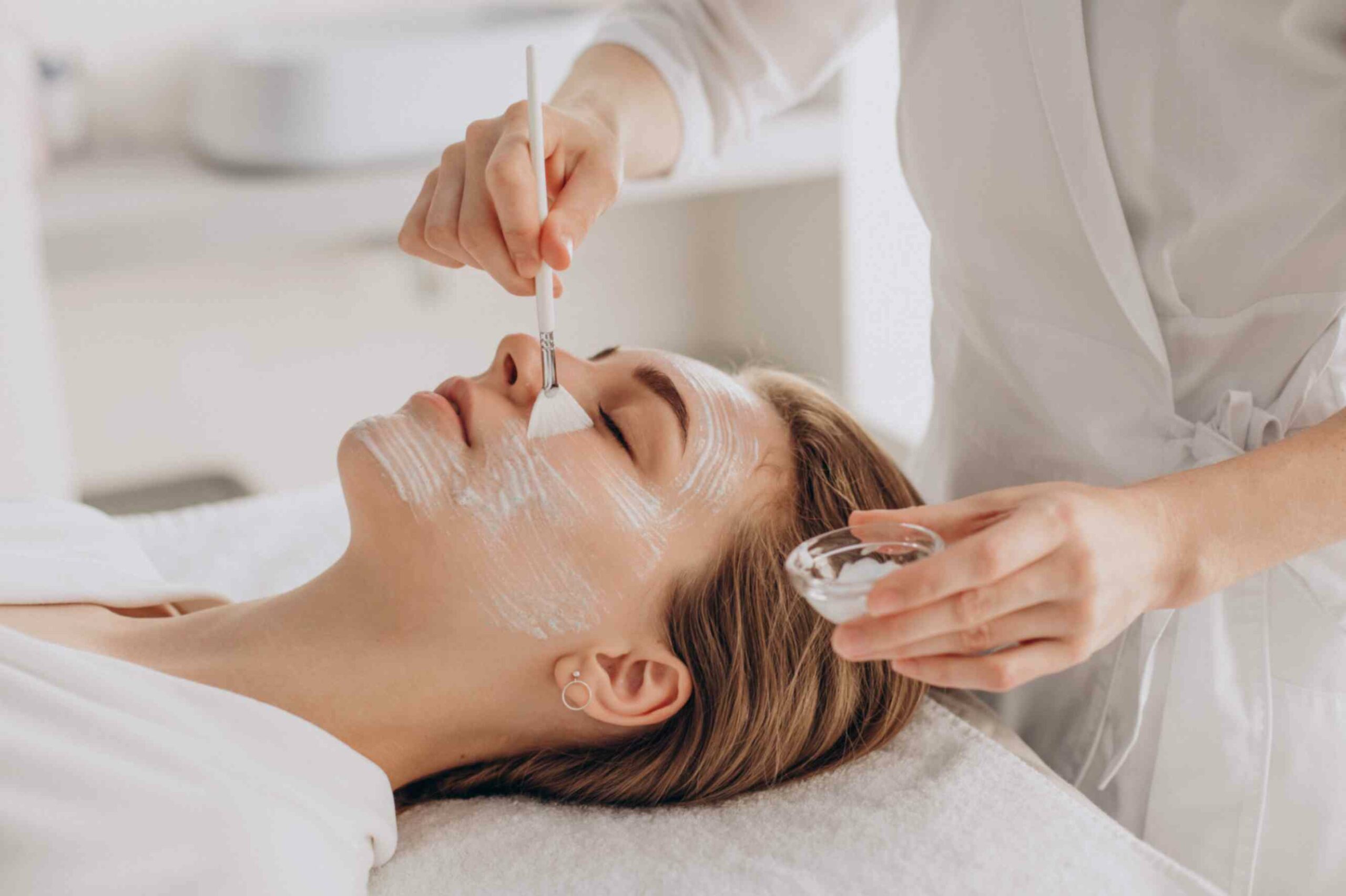
Modern skin care solutions and treatments are evolving fast, but a bigger treatment menu does not automatically guarantee results. What matters is how well a skincare professional can understand your particular concerns and match them with the right treatment, or a carefully considered combination of treatments.
The challenge is rarely finding another treatment. It is knowing which solution makes sense for the situation, how it fits your skin, and when restraint is the better professional choice.
1. LED, IPL and Laser Treatments When the Concern Goes Deeper
Modern aesthetic care has moved well beyond creams and manual treatments. Light and energy-based technologies can now be selected according to a particular concern, but this is also an area where professional judgment matters greatly.
LED therapy, IPL photo facial and laser treatments work in very different ways and are selected for different purposes. LED may be incorporated into skincare routines for goals such as calming or acne-focused care, depending on the wavelength and device. IPL can be used for certain pigmentation and vascular concerns, while specific lasers can provide much more intensive resurfacing.
That difference is important when choosing treatment. Expertise is not having an answer for every problem. It is knowing which answer belongs to which problem. That is because skin type, recent sun exposure, medications, pigmentation risk and the exact technology being used all deserve attention.
2. Permanent Makeup for Definition, Balance and Camouflage
Some people are not looking for “better skin” when they book an aesthetic appointment. Probably it’s keeping the consistency of daily regimen. For example, you may be tired of drawing my eyebrows every morning, and you want options.
That sounds like a small complaint until you do the math. Months and years of filling sparse brows and correcting uneven shapes, trying to make both sides look alike, can become a surprisingly frustrating routine. Permanent makeup can take some of that repetition away. Depending on the client’s features, skin condition and desired result, options may include:
Depending on suitability, treatments may include:
- Microblading or other brow micropigmentation techniques
- Lip blush for subtle color enhancement
- Permanent eyeliner
- Scalp micropigmentation for the appearance of greater hair density
- Scar or stretch-mark camouflage in selected cases
The difficult part is often not putting pigment into the skin. It is deciding how much, where and what color.
And when looking for a result that looks attractive, don’t seek what your friend chose. What fits on someone else can look completely wrong on a different face. Good work starts with listening, proportion, color matching and realistic expectations rather than copying a popular style.
3. Dermaplaning and Microdermabrasion for That Fresh, Smooth Feel
Sometimes the mirror gives you a very specific complaint: “My skin feels rough.” Or perhaps makeup that used to glide on now seems to catch on every little patch. That is the kind of situation where surface treatments can earn their place.
- Dermaplaning requires skills of a trained professional to use a sterile blade to remove superficial dead skin cells and fine facial hair.
- Microdermabrasion takes a different route, using controlled mechanical exfoliation to refine the outer surface.
- And if the skin is irritated, sunburned or dealing with certain active breakouts, the best professional decision may be to postpone both.
That last part matters. A good treatment menu should include knowing when not to treat.
4. Microneedling and Nano-Infusion for Concerns That Surface Skincare Cannot Fully Address
Eventually, there is the familiar bathroom-shelf problem. You have the cleanser, the moisturizer, the serum and perhaps several other products, but you are still noticing changes in texture or fine lines. That is when a more targeted treatment may enter the conversation.
- If facial hair is the main annoyance, removing the outermost layer of dead skin cells along with fine vellus hair may make more sense.
- If roughness or a dull surface is the bigger issue, using vacuum suction may be considered instead.
- And if leveraging the body’s natural collagen is the target, microneedling becomes the ideal technique. It creates controlled microscopic channels in the skin, stimulating a wound-healing response that can support collagen remodeling over time.
Therefore every procedure needs proper assessment, technique and aftercare rather than something to select simply because it sounds more advanced.
Other approaches, such as nano-infusion, work more superficially and may be selected when the priority is product application and surface appearance rather than collagen induction.
The right choice depends on the situation:
- How pronounced is the concern?
- How sensitive is the skin?
- How much recovery time is realistic?
- Is the priority hydration, texture or longer-term improvement?
A client who has only a free weekend does not necessarily need the most intensive procedure available. Sometimes the smarter strategy is the one that fits real life.
5. Enzyme Resurfacing and Oxygen-Focused Facials for the “I Need to Look Fresh” Moment
Now imagine a different client. There is a birthday, wedding, graduation, photo session or important meeting coming up in a few days. They are not asking for dramatic resurfacing. They simply want their complexion to look rested, smooth and well cared for.
That changes the conversation. An enzyme-based treatment can provide controlled superficial exfoliation, while some oxygen-focused facial services are designed around hydration and a refreshed cosmetic appearance. These approaches can be appealing when minimal recovery is a priority.
But this is also where marketing language can get ahead of reality. Terms such as “cellular detox,” “oxygenating the cells” or claims about delivering ingredients deep into tissue can sound impressive without necessarily telling a client what the treatment can realistically accomplish.
A professional service should be comfortable explaining that distinction. If the likely result is a temporary fresher appearance, say so. Honest expectations do not make a treatment less attractive. They make the service more credible.
6. The Treatment Plan Should Make Sense as a Whole
The easiest way to build an aesthetic menu is to keep adding procedures. Brow treatments, exfoliation, needling, LED, oxygen facials, resurfacing, the list can become impressive very quickly. The harder job is deciding what doesn’t belong in the same appointment.
Suppose someone wants brow enhancement but also has sensitive skin and an upcoming event. Another wants smoother texture but has very little recovery time. A third has several concerns and expects everything to be corrected in one visit. These situations require different conversations, even if all three walk into the same spa.
A strong treatment plan takes account of:
- What the client is actually trying to change
- Current skin condition
- Previous procedures and skincare use
- Recovery time and lifestyle
- A result that can realistically be maintained
This is where listening becomes part of the treatment itself. The most sophisticated service is not necessarily the one with the most steps. It is the one where each decision has a reason.
In essence, true results of a facial do not come from a single step alone, but rather from a carefully coordinated process of preparing, purifying, and protecting the skin. Professional skin preparation is where many may falter. Proper preparation and process maximize effectiveness. Following a professional sequence helps nutrients penetrate deeply to achieve high-quality results without damaging the skin. A modern skin care clinic earns trust when its expertise is visible in its decisions, not simply in the number of treatments on its menu.





Leave a Reply