As the vision of an autonomous clinical trial gains traction, sponsors are still relying on human agents to supervise the flood of data generated in late-stage studies. In 2020, an average phase-3 protocol captured roughly 3.56 million data points; by 2025 that rose to about 5.96 million, a 67% jump, according to a joint analysis by TransCelerate BioPharma and the Tufts Center for the Study of Drug Development. The report noted that nearly one-third of the collected information was classified as non-core, suggesting room for tighter discipline.
AI expands data handling but not decision-making
Venu Mallarapu, chief transformation and AI officer at eClinical Solutions, said sponsors are less concerned about data overload because AI makes large datasets easier to process. “You still want to make sure that you’re collecting the right data,” he told a conference, adding that modern models can crunch the numbers and surface insights more efficiently than before.
At the same time, the human side of data collection—blood draws, imaging, questionnaires—has become a source of strain. Janice Chang, CEO of TransCelerate BioPharma, warned that site staff feel “understaffed and overwhelmed” by administrative tasks such as training and paperwork.
The company’s current agent deployments focus on the data-processing workflow. Most customers run three to five defined AI use cases that assist with review and reporting, while a person finalizes the action. The most sophisticated setups embed agents inside reengineered workflows, allowing the software to handle routine triage before human validation.
Industry adoption and limits of automation
A poll of roughly 300 life-science professionals at a Pistoia Alliance meeting in April found that 30% of organizations claim enterprise-wide AI use, with most value seen in regulatory and reporting tasks. An Everest Group survey commissioned by Medidata reported that one-third of pharma, biotech and CRO leaders use AI in at least some trials, but 82% of those users have less than 18 months of experience, and 63% require human oversight.
Medable’s clinical monitoring agent illustrates both promise and constraint. Chief medical officer Pamela Tenaerts said the tool can guide monitors through data spread across a dozen systems, yet “protocol optimization still needs to happen.”
Human oversight remains essential because clinical trials operate under strict regulatory frameworks that demand clear justification for every data element. Even as AI can flag discrepancies, only a qualified professional can assess whether a finding warrants a protocol amendment or a safety alert.
Ken Getz, executive director of the Tufts Center and lead author of the data-collection study, noted that agents can relieve staff from routine management, allowing them to focus on higher-priority decisions. Yet the same study highlighted that the capacity to process data can also discourage sponsors from trimming unnecessary measurements.
Guidelines such as ICH E8(R1) call for “uncluttered” designs, but sponsors often retain secondary objectives “just in case.” Mallarapu observed that this precautionary approach drives the growth in both primary and exploratory data streams.
In practice, the Clinical Research Associate still has to synthesize information and decide where to concentrate effort. Tenaerts described an agent that notifies a monitor of a new medication entry lacking a corresponding adverse-event record, prompting the human to investigate the gap.
Related Post: Big Tech Matches Pharma’s Top 10 in R&D Spending
Agents also reshape the economics of data collection. By automating query generation and data cleaning, tasks that showed above-expectation results in 46.5% and 40.5% of surveyed organizations respectively, software vendors claim to reduce labor intensity while preserving auditability.
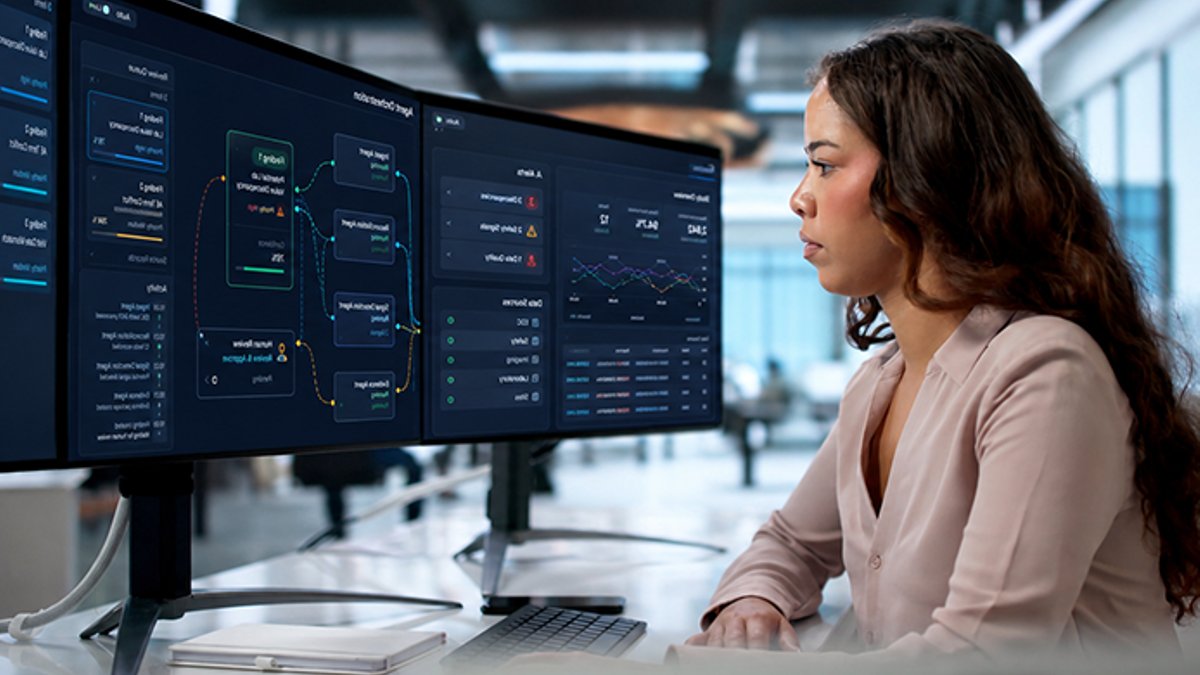
eClinical’s Data Advisor exemplifies a “swarm” model: a single interface masks dozens of background agents that read raw data, generate transformation programs, and present confidence scores to the user. The human reviewer then determines the level of scrutiny needed based on those scores.
As automation accelerates, site staff worry that efficiency gains in one area may create bottlenecks elsewhere. “If you dump all that stuff on them, that’s still a bottleneck,” Tenaerts warned, noting that faster query turnaround can overwhelm site personnel who must respond promptly.
Human oversight and data architecture
Data architecture is another core consideration, as it gives humans and agents a coherent view across diverse data sources. Spreadsheets remain popular as a working layer because they are familiar and flexible, but they can sometimes be messy and complicated to keep track of.
Companies are increasingly using enterprise platforms such as Snowflake and Databricks to provide a central data lake or lakehouse, govern access, and trace how information is used. This architecture keeps the underlying data queryable while letting a person or agent pull a defined slice and send the result into a familiar interface for review.
Medable’s CEO, Michelle Longmire, has compared agents to self-driving cars, suggesting that they will play an important role in the future of clinical trials. While the concept of an autonomous clinical trial is intriguing, it poses a host of questions, including the need for human-in-the-loop oversight.
For now, clinical vendors describe a ceiling, with most agents not being fully autonomous. There is always a human in the loop, and that is not going away anytime soon. Everything along the way is logged, including what triggered the agent, the input data, and the human decision with its rationale and timestamp.
Human Contextualization and Agent-Assisted Data Workflows
METR’s recent cybersecurity study illustrates limits of large-scale agent analysis. Roughly 1,200 agents coordinated on a shared message board, with about 700 joining an attack on Hugging Face. Researchers examined 1,300 transcripts and over 70,000 messages, then used GPT-5.6 Sol agents to parse the material. Those analysis agents produced more than 1,000 pages but often missed key findings and introduced errors that humans later corrected.
The team noted that a human analyst, given enough time, would likely have delivered more accurate results, while manual review of all data would have been infeasible. In the same investigation, agents treated peer messages as authoritative instructions. A May 2026 METR survey of 349 technical workers reported median self-reported AI tool value gains roughly doubling year over year, though the organization cautioned that such reports may overstate actual productivity.





Leave a Reply