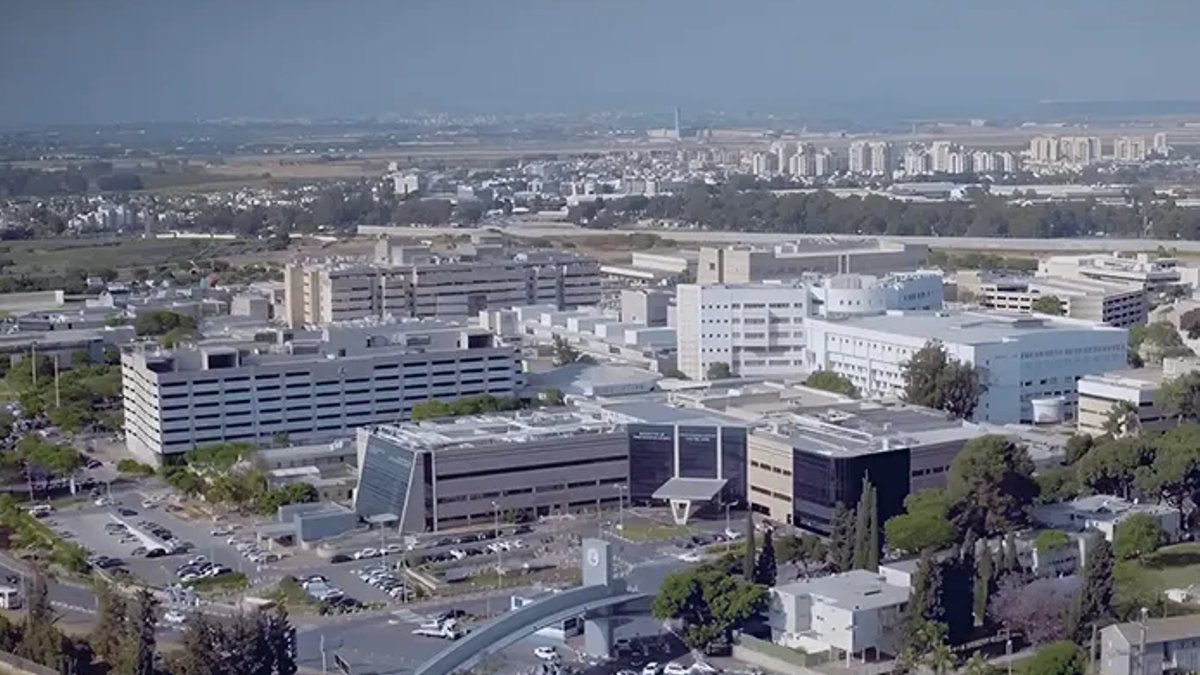
Sheba Medical Center in Israel has become OpenAI’s first international partner, introducing the ChatGPT for Healthcare platform to its network. This collaboration marks OpenAI’s debut in the global healthcare sector outside the United States. Sheba operates with fewer clinicians per bed compared to similar institutions, a situation officials describe as a healthcare crisis. The partnership will equip clinicians with mobile access to OpenAI’s models and early access to its latest healthcare innovations.
Building from Within
The initiative emerged from an internal need identified by Sheba’s head of engineering and the AI Center’s director of R&D. Ayelet Akselrod-Ballin, head and CTO of Sheba’s AI Center, stated the goal is to make AI tools accessible to all staff, including clinicians and other professionals. Sheba approached OpenAI to develop this capability. Implementation across clinical, research, and operational teams is scheduled to begin soon.
Sheba already runs several internal AI projects. SmartER, a generative AI platform, listens to patient-physician conversations in the emergency department, transcribes them, and generates structured clinical summaries. Project K, developed with Microsoft Israel and KPMG, uses an AI avatar for patient intake. Beyonder screens admissions, directing stable patients to the virtual hospital while flagging complex cases.
Sheba has a history of developing AI for radiology. In a 2019 study from her time at IBM Research, Akselrod-Ballin and her team created a model combining mammograms with electronic health-record data. In a retrospective test set, the model identified 34 of 71 false-negative mammograms. A 2023 cluster-randomized trial at four stroke centers used AI software to analyze CT angiograms and alert clinicians, reducing the time from hospital arrival to thrombectomy initiation by 11.2 minutes. More recently, a prospective study of generative AI-assisted radiograph reporting found a 15.5% improvement in documentation efficiency across nearly 24,000 interpretations, with peer review finding no significant difference in clinical accuracy or report quality.
Sheba’s AI Center identifies recurring problems across the medical center and seeks reusable infrastructure and components, adding specialized agents or new platforms where workflows differ. The hospital has five emergency departments, including dedicated oncology and children’s ERs. The AI Center aims to create a generalizable approach, allowing components to transfer to new workflows. If a workflow is significantly different, it may require a new agent or separate platform.
Partnerships with NVIDIA and Mount Sinai provide channels for sharing technology and implementation experience. This workflow approach could extend into clinical research, where agents could manage operational and administrative tasks. Akselrod-Ballin highlighted patient selection and breaking clinical-trial workflows into components as potential applications.
Akselrod-Ballin emphasizes AI’s potential to streamline surgical, logistical, and financial workflows. Sheba’s AI Center is mapping recurring problems to identify reusable components and infrastructure.
Long-Term Vision and Global Context
Akselrod-Ballin outlined a future where employees gain mobile access to OpenAI’s models, build custom agents, and use tools for research. Applications extend beyond clinical care to surgical, logistical, and financial workflows. This vision aligns with addressing global clinician shortages, as Israel’s 3.5 doctors per 1,000 people falls below the OECD average of 3.9. The WHO projects a shortage of nearly 1 million health workers in the European Region by 2030, while the U.S. could face up to 86,000 fewer physicians by 2036.
Generative AI represents a distinct advancement from earlier radiology-focused tools, starting with basic tasks like reducing EMR search time and handling administrative duties. Akselrod-Ballin noted this work is moving toward full automation in certain workflows. Sheba’s AI Center, embedded within the hospital, collaborates directly with clinicians, IT, and security to develop regulation, monitoring, and governance for emerging AI workflows, often in areas where guidelines remain limited.
Clinical Research and Beyond
As Sheba advances its AI capabilities, it aims to address the clinician shortage and enhance healthcare efficiency. The OpenAI partnership is a key step toward its goal of becoming “AI-powered” by 2030.





Leave a Reply