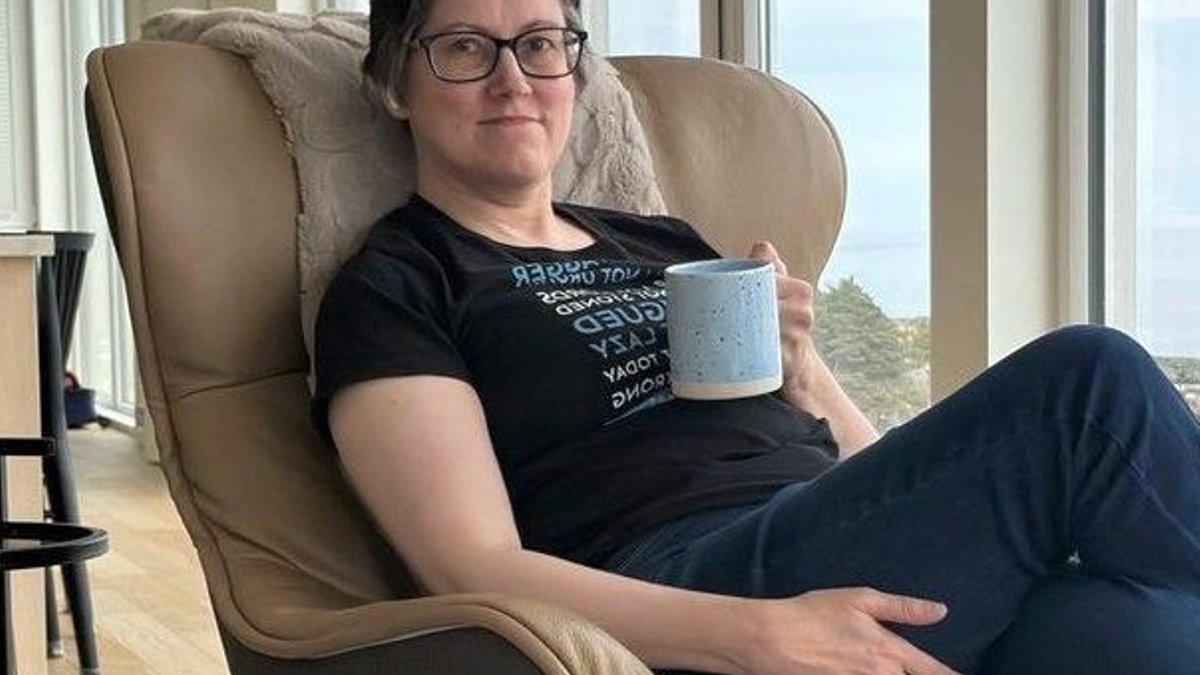
Jamie Thornhill had five years to accept that his wife, Lorraine, would eventually choose medical assistance in dying. Yet, when the day finally arrived, the reality of the loss was something he could never have been ready for.
“I thought I was prepared, you’re never prepared,” he said.
Lorraine was diagnosed with Huntington’s disease, a progressive neurological condition that had already affected her father and other relatives. She raised the topic of MAID at her first appointment.
She wanted to understand the process and know what would be involved when the time came. Thornhill knew from then that she had made up her mind.
By the time her MAID date was set, Lorraine was mentally prepared. Then, just days before the appointment, the family was told the date would have to change because the doctor was unavailable. She had chosen May 24, but they were told they would have to wait until the following day.
The extra day meant more time together, but Lorraine had been preparing herself for a specific day.
Related: Summer Travel Tips for Managing Diabetes Gracefully
A Final Morning Routine
The uncertainty continued into the morning of the appointment. The family knew they were going to the Miller Centre but did not initially know exactly where they were supposed to go. They were eventually told to meet at the palliative care unit.
Thornhill had barely slept.
He and Lorraine’s best friend, Kim Mavin, expected the morning would be difficult for Lorraine. She surprised them by carrying on with her usual routine. She put bread in the toaster, ran a bath, and ate her breakfast before sitting down to cuddle with her daughter, Chiara.
When Lorraine looked at the clock, she told them they had to leave.
“Guys,” she said, according to Thornhill. “We gotta get going. I can’t be late.”
He tried to make her laugh, joking that she was not going to a hair appointment. The family then made their way to the hospital. Thornhill found that he could not immediately go into Lorraine’s room, needing some time to gather himself, while Kim and Chiara went in first.
When Kim later told him about those first moments, she described Lorraine as calm and relaxed.
Related: Drinks to Beat the Summer Heat
Lorraine was even wondering why her IV had not yet been inserted and why the process was taking so long.
“This is what she wanted. She was ready,” he said.
While the clinical logistics of the date change and room location caused friction, this administrative noise often contrasts sharply with the deeply personal nature of the choice. Patients handling end-of-life decisions must often grapple with a system that operates on strict schedules, even as they try to find closure on their own terms. The clash between institutional procedure and individual timing is a recurring theme for families in these situations.
Eventually, Thornhill went into the room. Chiara was lying beside her mother on the bed, and Kim was on the other side. He stood above Lorraine, holding her hand. Once Lorraine was settled, nurses inserted her IV lines and the doctor came in to confirm that she still wanted to proceed.
The family had time to say their goodbyes.
The Procedure and Its Aftermath
When the doctor began administering the medication, Thornhill said everything happened quickly. The process involved three injections. The first relaxed Lorraine’s body, the second put her into a coma, and the third stopped her muscles from functioning.
“When he put the first needle in, she lifted up her head, and she looked over at me, and she said, ‘I love you,’” he said. “And with that, she was gone. It was that quick.”
Related: Home Cooking Made Easy with Basics
For Thornhill, the experience was unlike watching someone die after a prolonged illness, where families may spend months or years witnessing a loved one’s suffering. He described Lorraine’s death as the most peaceful thing he had ever witnessed, despite the pain of losing her.
“There’s not this long death, I call it, watching someone suffering in the bed,” he said. “The family is suffering. But it is so peaceful for her.”
Thornhill does not remember leaving the hospital. Friends who had been with the family took his car keys from him and insisted on driving him home. He had intended to drive himself, but those around him knew he was not in a state to do so.
The group stopped at Tim Hortons on the way home, but Thornhill cannot remember going inside.
“To this day, I still cannot remember going into Tim Hortons,” he said.
Finding Peace After Loss
Looking back, he is grateful that his friends recognized what he needed in a moment when he could not see it himself. The family had also been supported throughout the wider process by friends and relatives, as well as people Thornhill came to know through the Huntington’s community.




Leave a Reply