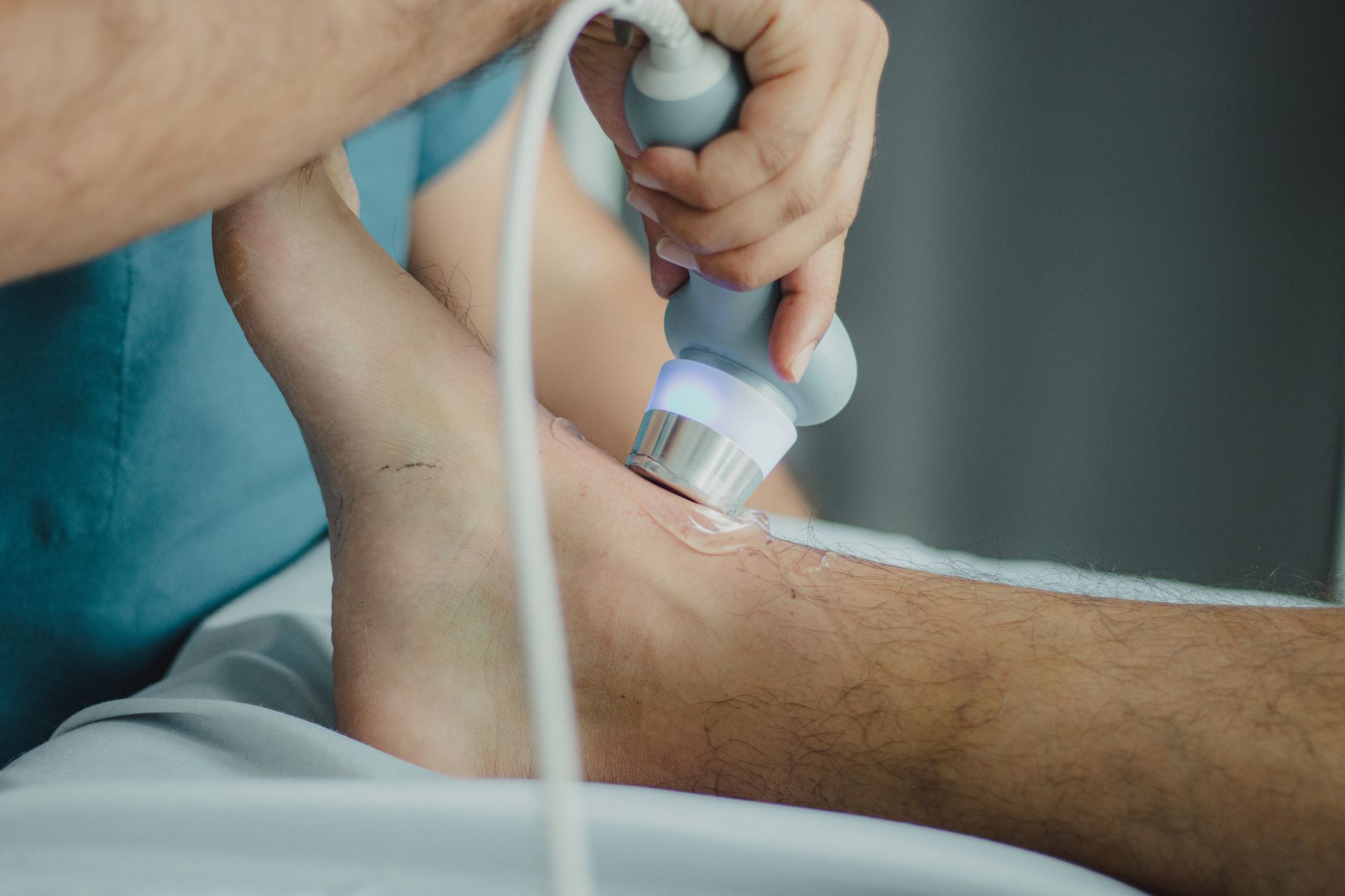
Researchers at the University of Plymouth’s Brain Research and Imaging Center and the University of Exeter Medical School have found that using ultrasound to stimulate a specific part of the brain could offer a noninvasive therapy for those experiencing chronic pain.
The study, published in Nature Communications, used transcranial ultrasound stimulation (TUS) to target the dorsal anterior cingulate cortex (dACC), a region of the brain implicated in chronic pain.
Read Also: Osteoporosis could increase mortality risk in postmenopausal women
Participants underwent TUS sessions, during which their right hand was placed in a cold gel to elicit pain sensations, and they were asked to rate the severity of any pain they were feeling.
The researchers also used MRI and magnetic resonance spectroscopy (MRS) scans to monitor any functional and biochemical changes within the participants’ brain.
The results showed that while TUS had no immediate effect on pain intensity, participants reported a significantly greater reduction in pain from 28 to 55 minutes after the TUS application, suggesting a delayed analgesic effect.
Dr. Sophie Clarke, lead author of the study, said the research aimed to characterize how transcranial ultrasound stimulation interacts with—and potentially alters—the brain’s processing of pain.
Understanding these mechanisms will be important to support the next steps in understanding whether the stimulation can be effective in helping patients with chronic pain, according to Dr. Clarke.
The University of Plymouth is recognized for its brain stimulation research, and its academics have conducted extensive research into the benefits of brain stimulation for conditions including anxiety and depression, addiction, and other neurological or psychiatric disorders.
Professor Elsa Fouragnan, Director of the University of Plymouth’s Brain Research and Imaging Center, said the findings of the new work are really promising, and they are already building on it to assess whether TUS could be a beneficial and noninvasive therapeutic treatment.
The study involved researchers at the University of Exeter as part of a collaboration to address the challenge of minimally invasive treatments for brain disorders.
Dr. Sam Hughes, study author, added that the research represents an important first step in understanding how this technology can noninvasively stimulate deep brain regions involved in pain processing.
The next stage of their research will be to test whether this approach can help people living with chronic pain, according to Dr. Hughes.
The study’s results were published in Nature Communications under the title “Multi-focal ultrasound neuromodulation to the dorsal anterior cingulate cortex disrupts behavioural and neural pain processing.”
The research was conducted in room 314 of the University of Plymouth’s Brain Research and Imaging Center, and the data was collected over a period of six months.
In a separate interview, Dr. Clarke mentioned that the team is planning to conduct further research on the effects of TUS on fibromyalgia patients, which could potentially lead to new treatment options for this condition.
Chronic Pain and Brain Stimulation
Chronic pain is a complex condition that affects millions of people worldwide, and current treatments often have limited efficacy or significant side effects.
Brain stimulation techniques, such as TUS, offer a promising alternative, as they can modulate brain activity and reduce pain perception without the need for invasive surgery or pharmacological interventions.
Further research is needed to fully understand the mechanisms underlying the effects of TUS on chronic pain and to develop effective treatment protocols.
However, the current study provides a significant step forward in the development of noninvasive therapies for chronic pain, and its findings have the potential to improve the lives of millions of people worldwide.
Study Details
- Participants: 20 individuals with chronic pain
- Intervention: Transcranial ultrasound stimulation (TUS) targeting the dorsal anterior cingulate cortex (dACC)
- Outcomes: Pain intensity, functional and biochemical brain changes
- Results: Delayed analgesic effect, reduced pain perception 28-55 minutes after TUS application
The study’s findings have important implications for the treatment of chronic pain, and further research is needed to fully explore the potential of TUS as a noninvasive therapy.




Leave a Reply