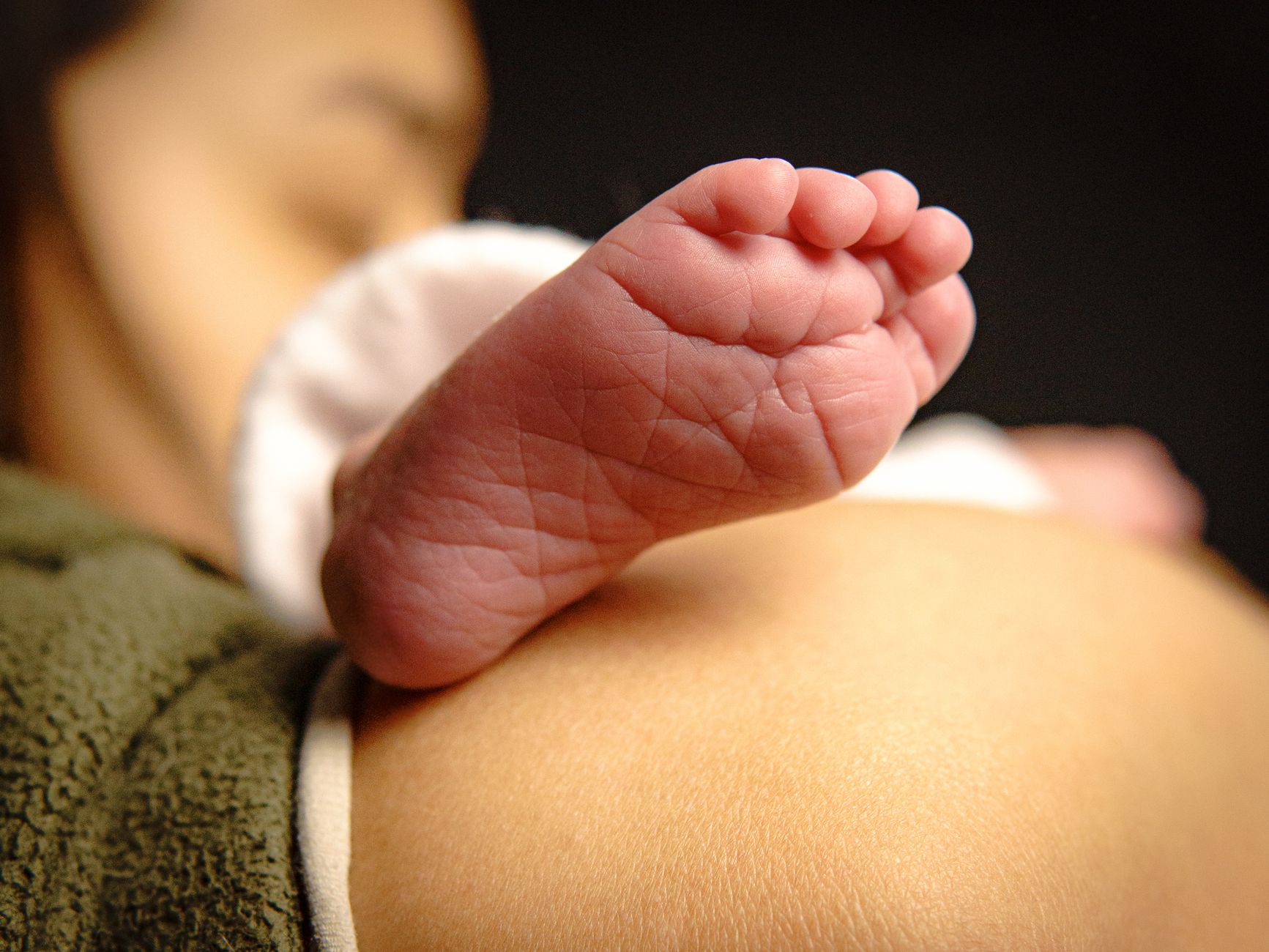
Every hospital birth begins with a routine: swaddling, weighing, and a quick injection in the baby’s thigh. For parents, the moment passes quickly, but that shot—vitamin K—may be one of the most critical actions taken in a newborn’s life. It prevents a rare but potentially deadly condition called vitamin K deficiency bleeding, or VKDB, which can cause internal hemorrhaging in the brain, intestines, and other organs.
“It’s one of the oldest, safest, and most effective preventive interventions in newborn medicine,” says Mary Beth Howard, a pediatric emergency medicine physician at Johns Hopkins Hospital. The American Academy of Pediatrics has recommended the shot since 1961, typically within six hours of birth. Yet, misinformation online has led some parents to refuse it, increasing the risk of VKDB by up to 81 times.
Related: Researchers find key to stopping fibrosis
Vitamin K is essential for blood clotting, but newborns are born with low levels. The nutrient doesn’t cross the placenta easily, and breast milk provides insufficient amounts. Without the injection, babies face a 1 in 14,000 to 25,000 chance of VKDB. The condition often strikes suddenly, with no warning signs. “Infants look healthy beforehand,” Howard says. “The only sign is catastrophic bleeding, which is already severe and hard to reverse.”
Brain bleeds are among the most severe outcomes. If blood accumulates near the brainstem—controlling breathing and heart rate—the damage can be irreversible. “Once bleeding starts, treatment options are limited,” Howard adds. Vitamin K can be given later, but brain damage may already be permanent.
Andrew Thorne-Lyman, a nutritional epidemiologist, has studied VKDB in Bangladesh, where the shot is not standard practice. He stresses that the injection is not a vaccine but a vitamin supplement. Oral alternatives are unreliable, as absorption varies in newborns. Repeated dosing would be needed, which many parents avoid.
Related: Your Ultimate Guide to Recovering Quickly from Inguinal Hernia Surgery
Some parents refuse the shot due to a general distrust of medical interventions at birth. Others confuse it with vaccines, a misconception Thorne-Lyman calls “dangerous.” A 2019 study found that fear of “foreign” procedures also plays a role. “Because VKDB is so rare now, many parents don’t see it as a threat,” Howard says. “The disease has become invisible.”
Diagnosing VKDB in emergency rooms has grown more complex. Doctors must now consider it when evaluating symptoms like lethargy, vomiting, or pauses in breathing in infants who skipped the injection. “Trauma is the usual cause of bleeding,” Howard explains. “But we can’t ignore VKDB anymore.”
Related: Brain recombines past knowledge for flexible planning
Howard urges expectant parents to discuss the shot with their OB or midwife before delivery. Unlike vaccines given at well visits, the injection happens in the chaos of labor and delivery, leaving little time for questions. “Parents are turning to social media instead of their doctors,” she says. Providers should address the topic during prenatal visits to counter misinformation.
Decades of research confirm the shot’s safety and necessity. It has no proven link to cancer or serious side effects. Howard emphasizes the stakes: “VKDB can cause lifelong damage or death. We know this, and we have a simple solution.”




Leave a Reply