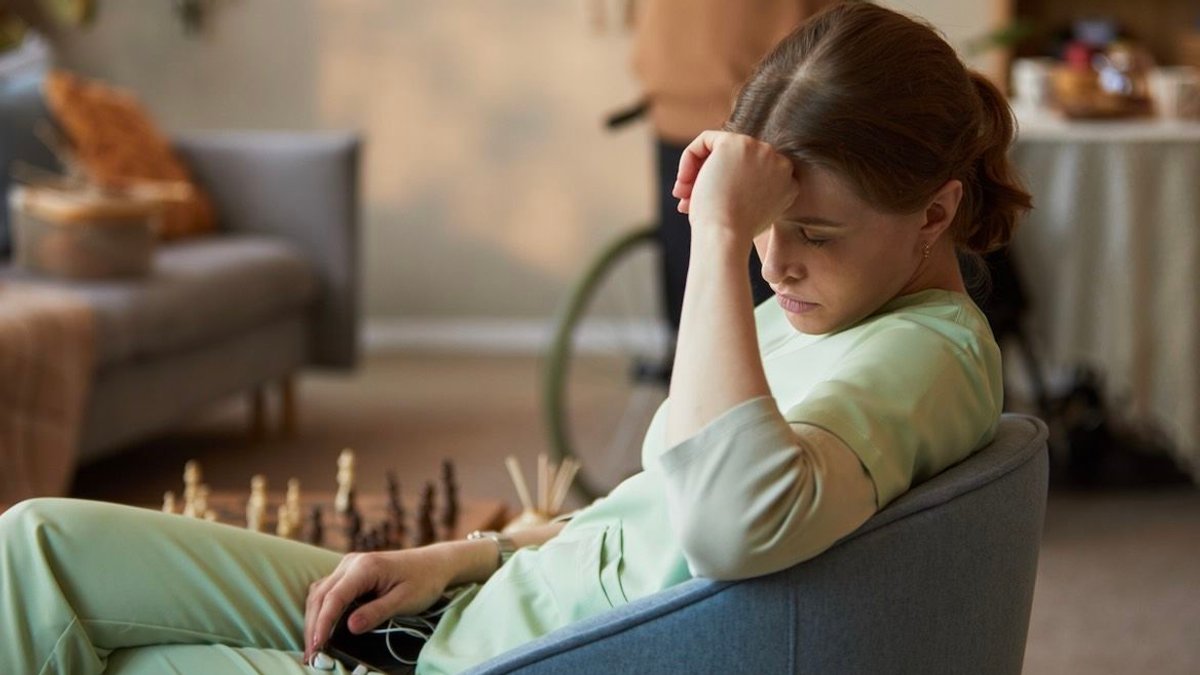
About half of Canadians will become caregivers at some point in their lives, yet the role often demands more than the person can give. The job, whether it is paid or done for a loved one, is a demanding one. Caregivers frequently put their all into caring for others, leaving self-care on the back burner. When self-care goes out the window, it creates space for burnout to enter the equation.
“Almost three-quarters of caregivers feel so burnt out, they don’t know if they can keep going,” said Amy Coupal, CEO of the Ontario Caregiver Organization. Caregivers are usually carrying a pretty high mental load, dealing with what’s happening in the moment as well as what might come up in the future.
From managing a loved one’s day-to-day life to booking and escorting them to medical appointments, managing medications and supporting in any other way necessary, there is a lot on the plate of a caregiver. And there are no breaks. “When your 24 hours has 48 hours worth of things in it, something’s got to give, right?” said Jacqui Murphy, co-founder of Elderella, a platform for families caring for elders. “When you’re caregiving for someone, you’re simply taking on someone’s whole life.”
Time is a significant source of pressure for caregivers because, as Murphy put it, there are way more things to do than there are hours in the day. That high level of at-capacity is doable in the short term, but caregiving is often open-ended, especially for people caring for ailing parents. When there is no end in sight, the pressure can build like a volcano.
“You’re trying to juggle your own life while you’re juggling their life,” said Murphy. “You’re paying your bills, you’re also paying their bills. You’re getting groceries, you’re also getting their groceries. You’re going to your doctor’s appointments, you’re also taking them to their doctor’s appointments. It’s just, at the end of the day, you’re just so exhausted that there’s no time.”
Coupal echoes that sentiment, noting that it’s not just the job of caregiving that can be a challenge. It’s all the logistics that come with it. “They may be thinking about, can I continue to work? Can I go back to work? How do I balance care with other commitments like parenting?” said Coupal.
Related: Gut Check Reveals Truth About Cleanses, Parasites, Health
What gets pushed to the wayside? The things people need to feel their best include nutrition, exercise, sleep, and time to clear their heads, relax or simply do something they enjoy, so they can take on the stressors of tomorrow. When these important aspects of wellness aren’t given the attention they deserve, both the body and the mind suffer greatly. There’s also a financial burden that comes with caregiving, adding to the stress and making burnout feel impossible to escape.
“Caregivers are often paying out of pocket for medical supplies or medical care, and they may also have made changes to their own work arrangements because of caregiving,” said Coupal.
Simply telling someone that they need to add in self-care to their schedule isn’t enough. As many caregivers know, they’ve read the pamphlets, they’ve researched what to do, and they’ve probably heard that they should try yoga or meditation a million times. “If somebody says to me, ‘you know, you should meditate,’ yeah, I’d love to meditate. When am I going to sit still for 10 minutes without somebody tapping me on the shoulder?” said Murphy. “I’d love to be able to extract myself and go do a retreat on the weekend or whatever.”
While the advice is well-meaning, it’s not about choosing not to do it. It’s about time. “Time pressures for caregivers are really significant,” said Coupal. “We need to have meaningful conversations about how their health and wellness can be prioritized and managed in a caregiving context so that they don’t become a patient themselves.”
Building a care team
So, what can a caregiver do to get some extra time on their daily clock? Much of it boils down to having a care team who can pick up some slack when the primary caregiver needs a break and finding support. Finding a care team isn’t easy, though. But it can be with some help.
Murphy compares the process to someone getting a cancer diagnosis and having their 10 best friends cook for them and “everybody shows up with lasagna.” To lighten the caregiver’s load, the care team must be privy to everything the caregiver is doing in real time so they can do so without unintentionally adding more tasks to their plate.
Related: Women’s health must be a national priority
For example, if five siblings are caring for an ailing parent, but one is the primary caregiver, repeatedly asking that person what needs to be done creates more work. But if all five are up to date on appointments, scheduling, medications, and anything else that needs to be done, there is a level of caregiving autonomy for each that creates an environment that allows each person to take on duties without getting overwhelmed.
“Lots of people say, ‘What can I do to help?’ But that’s actually not helpful, right? Because that then puts the burden back on the caregiver again to come up with a way that you can help so that you feel better because you’re helping,” said Murphy. “But it’s so hard to know what they can take. Nobody wants to overstep. Nobody feels like they have full information.”
It doesn’t have to be just family on the caregiving team. “If somebody had said to me, who are the caregivers on your mom’s team, I could have said my sister and me,” said Murphy, who has now since enlisted the help of her own platform to care for her mom. “Now she has 20 people on her care team.”
Some examples could be friends nearby, people who are around regularly, like cleaning people, or just anyone you can call and ask to check in on the person you’re caring for. “I know my mom has a wonderful relationship with her [cleaning lady]. I live an hour and a half away. If I need somebody to go check on my mom, I can now call her and say, ‘Hey, she just had knee surgery, do you mind dropping by and helping her take her medication later in the day?”
Coupal also notes that it can make a huge difference creating a “circle of care.” “Perhaps there’s extended family or neighbours, community groups who can provide support so that caregivers can have time to access what they need for their own health and wellness,” she said.
When burnout does strike, or as a caregiver you simply don’t know what to do to give yourself some time back, reaching out for support beyond the care team is another way to put yourself first. For example, there are plenty of free programs available that offer coaching and counselling to help when things get a little too heavy to deal with, as well as 24/7 hotlines through the Ontario Caregiver Association.
Related: Breakthrough Research Offers New Hope for MS Patients
Connecting with other caregivers can also be a significant source of support. “The benefit of connecting with other caregivers is you know you’re not travelling that journey alone,” said Coupal. “There are other people who may be facing their own unique challenges, but then you can also swap strategies, provide each other with support, and sometimes that can make all the difference.”
Virtual care is another option when a caregiver can’t find time to put their own health needs first, allowing them to connect with a provider for whatever they need without worrying about finding someone to step in for them.
Planning for the long haul
It’s challenging to create a plan when caregiving because things are constantly evolving. Schedules can change week to week or even day to day, so blocking out time at a set time each week for self-care might not always be feasible. But understanding that is the first step in ensuring you have fluid yet structured self-care built into your caregiving.
This can be as simple as knowing when you’ll get a break, even if it’s just for 20 minutes. “I’ll give you an example. I’ve heard from one caregiver whose break is going through the Tim Hortons drive-through by themselves, but knowing that they have that break makes all the difference,” said Coupal. “For another caregiver, it might be actually having some respite with the person that they care for. So, having a plan and knowing what’s coming and knowing that your health and wellness is prioritized into that plan can make a big difference.”
For Murphy, adding what she calls glimmers is a way to practice micro self-care without requiring too much planning, but rather a shift in mindset. “You train yourself to look for glimmers,” she said. “The glimmer might be, ‘Oh my gosh, the sun is so beautiful today. The air is so fresh today. I’m just going to breathe for a few seconds.’ That’s all I have, but I’m going to appreciate this moment of glimmer.”
It’s just a mindset, right? It’s … a belief that there will be a better day, but you need to architect that a little bit. And it may feel hopeless. You may feel like you’re at the bottom of the big huge mountain and you just need to climb the mountain, and hopefully on the other side of the mountain you’re going to be OK … you need to start today spending a tiny bit of time looking for glimmers and architecting, and the architecting is find a team.





Leave a Reply